Archive for March, 2026
Sprite flying again.
 March 21st, 2026 |
  Author:
 Well Sprite has been flying again for a couple of weeks and it is great to have him back. Every time I fly him I scan the horizon for pigeons – I mentioned this in previous blogs and in my book ‘Falconry – aspects of care of the trained falcon and hawk’.
We had some fun and games with him the other day when he suddenly decided to chase a magpie – what followed was very exciting. The magpie made for a picnic table and we had a wonderful few minutes with Sprite stooping backwards and forwards trying to catch it while the magpie dodged in and out of the table. It was such fun and showed just how clever magpies are. Eventually I arrived on the scene and the magpie on seeing Sprite tiring made a run for it and got to the safety of a tree. By which time I managed to get Sprites attention and called him into the lure. He was panting after his exertions and I was so delighted to have him back I called it a day. The whole spectacle was watched my some NHS workers on a conference having a fag/vape break. I was not sure whether they enjoyed it or were horrified! I hope the former.
Sprite had chased a magpie before around a black plastic bin – again the magpie used the bin to dodge the falcon by running around it. ‘Peggy’ my old lanner-lugger falcon from years ago was very adept at catching magpies and she used a different technique relying on her greater manoeuvrability aided by a long tail and steady waiting on. There are a series of photos of her waiting on in my book. She was an f1 hybrid and both her parents were wild caught. I think I talked about her interesting back story in a blog many years ago – I will try and find it. This was back in 1986. She was an exceptional falcon.
So I am currently flying Frank our lanneret and Sprite our peregrine. Now that I am retired it keeps my hand in and of course I still enjoy it very much. I think it is important because at some point I would like to update my book – but not for some years.
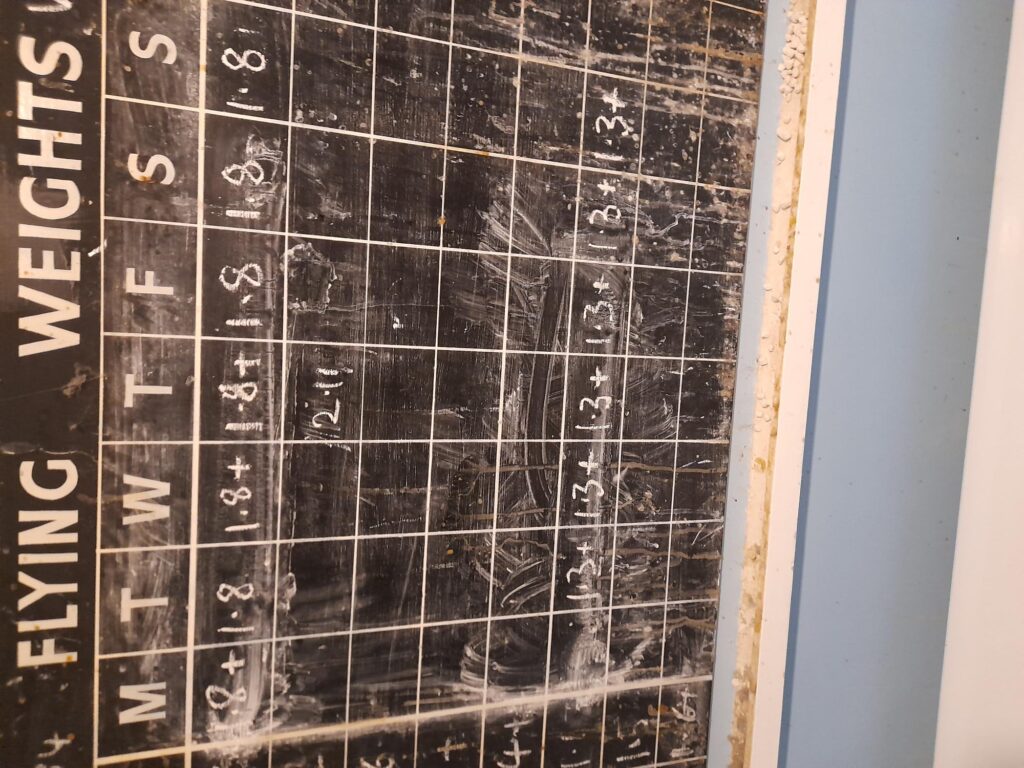
I still go through the motions of record keeping – old habits die hard but still very useful. Here are the record of the two falcon weights over the last week. The peregrine being the heavier falcon.
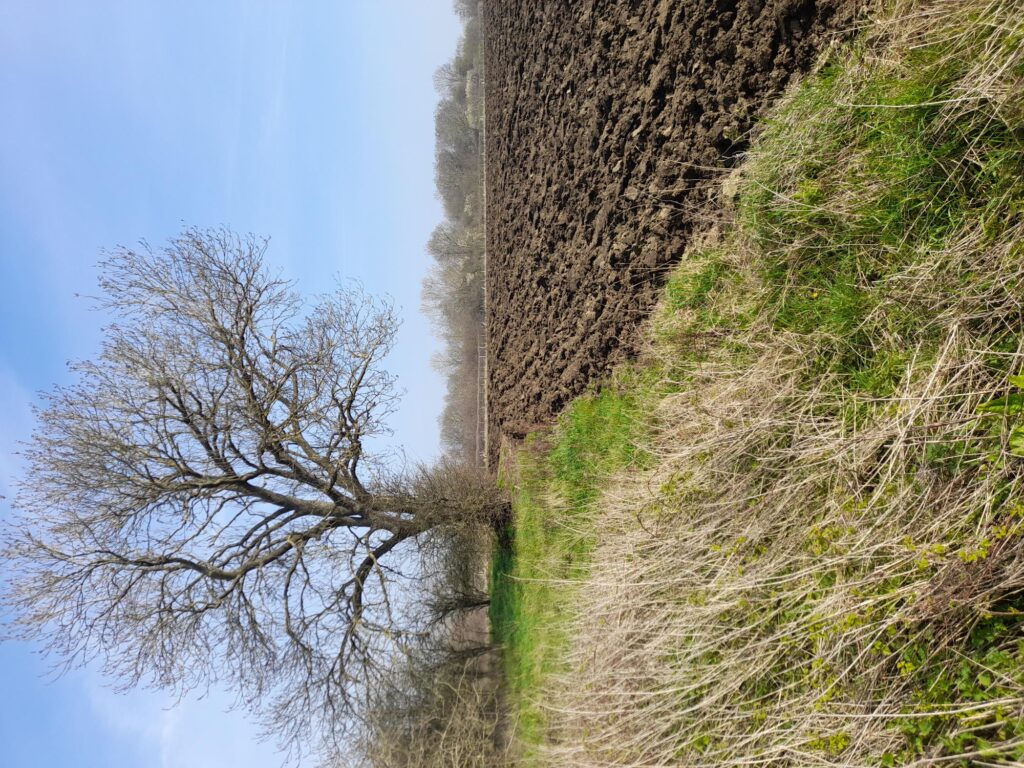
The weather has been quite wonderful the last few days which makes all the difference. Walking the dog has been joyous with the warmth of the sun on our backs. I noticed one of the fields had been properly ploughed which you do not see so much these days. They seem to just break up the surface and then drill. It maintains the soil structure. The crop for the last two years have been maize so I guess this deep ploughing is to prepare the ground for another crop. Here is a photo of the field from this morning.
 Posted in
High perches and casting jackets.
Height offers birds security – you can see this in the loft environment where birds seem to be calm and relaxed on the higher perches – particularly as they look out of the loft window.
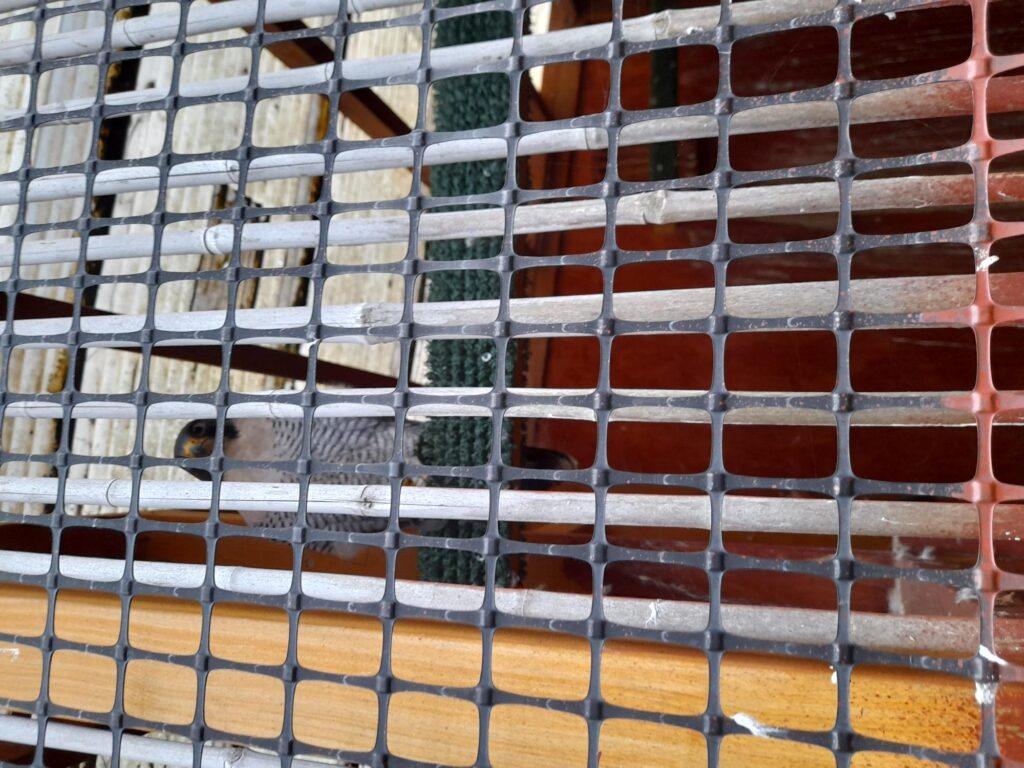
Above picture of my lofted peregrine ‘Sprite’ from my book ‘Falconry – aspects of care of the trained falcon and hawk’
You can walk right under a pylon with a wild peregrine high up on a spa looking down – sitting fluffed up on one foot – the picture of contentment – perfectly relaxed with its mortal enemy 100 feet below.
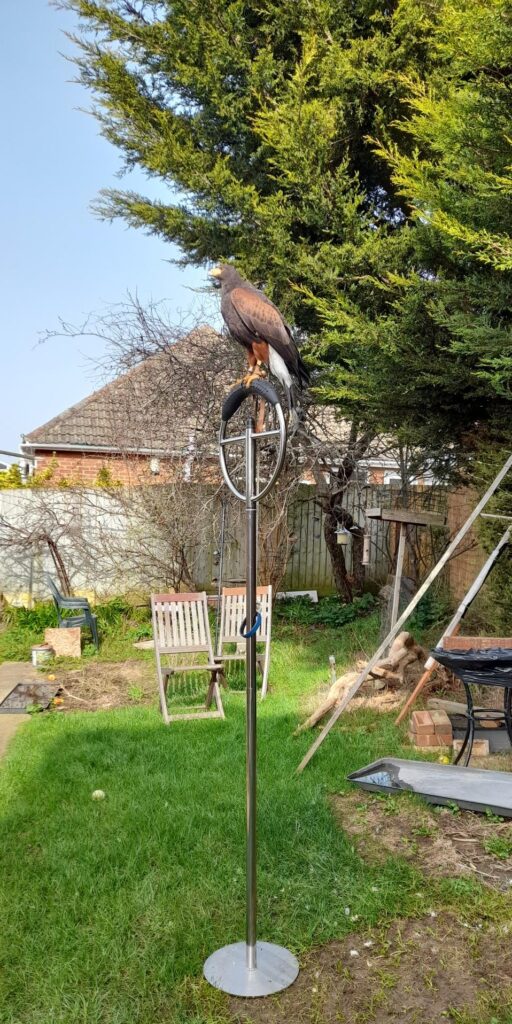
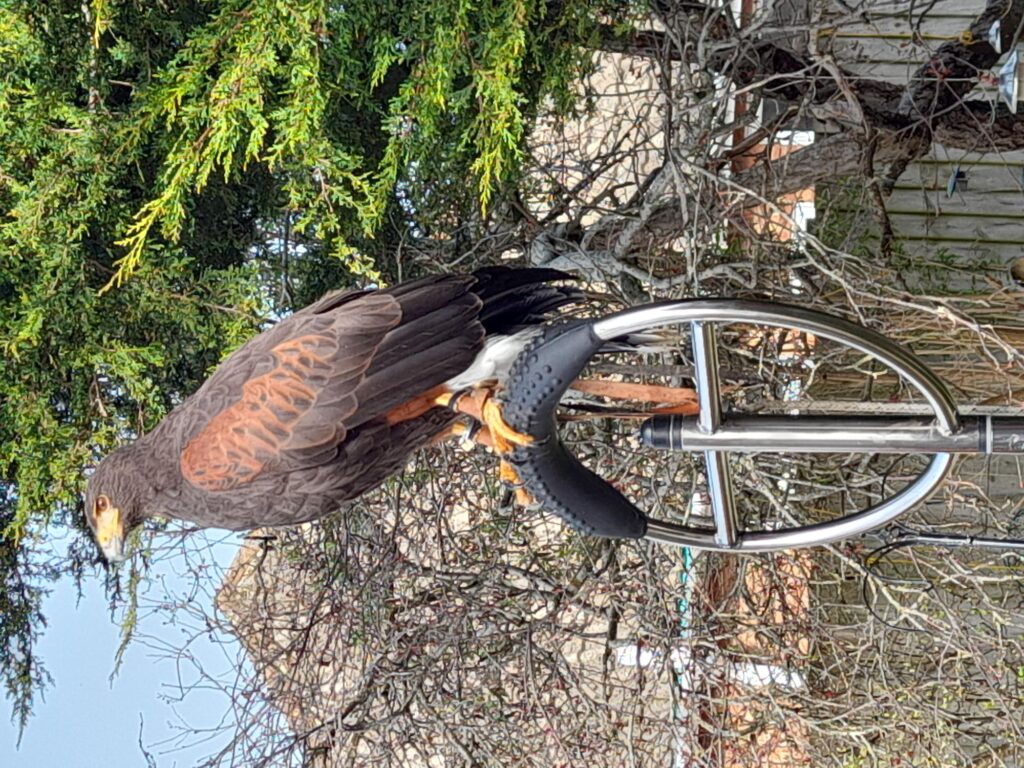
In the trained setting you can see something similar with the use – outside of the loft – of the high perch. They are really quite remarkable. Harris hawks seem to love them but in fact they can be used for most birds including falcons.
I first saw one been used for a goshawk but when I spent a morning with a falconry friend with her Harris hawk sitting out on the lawn on a high perch. It was perfectly happy and did not move all morning. She had a bath next to her which she could easily and safely descend down to it with the use of a standard leash length on a light weight but very strong plastic ring. So a long leash with associated dangers is not necessary.
I have not mentioned high perches in my book ‘Falconry – aspects of care of the trained falcon and hawk’ because I have never used one – but I was very impressed with what I saw and felt confident to recommend it to another falconry friend. Of course they are weather dependent and cannot be used if too hot or it is raining and should not be used as a substitute for proper housing for birds.
Also birds cannot be left unattended even though they are safer from dogs and cats than if on a low block or bow perch- but clearly not completely.
They learn – particularly Harris hawks – to use the perch very quickly a there is a premium in height in the bird of prey mentality. Here are a couple of pictures of the high perch in use – this was her first day! as I said I recommended that her falconer might consider one to solve a problem that he was experiencing in the lofting arrangements for this bird. They could also be used as an example of management change to jolt a Harris hawk out of an episode of feather plucking. I talk about this in my book.
Thinking about my book the section on casting I hope people will find useful. I used to help the head falconer when a bird needed to be cast. Many years later on visiting him he was using a casting jacket mainly because he was working on his own.
I have continued using an assistant and a T towel but on occasion I have used a casting jacket – I do have one.
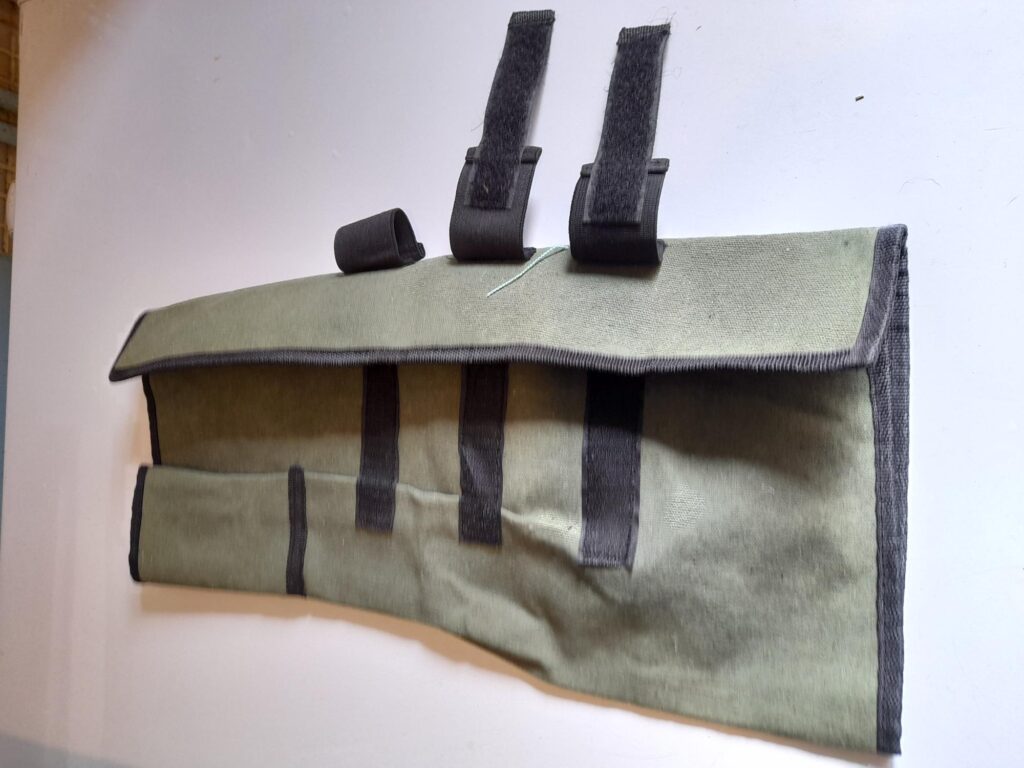
The important point is that the bird has to be cast first before it can be laid onto the casting jacket and that is the bit I cover including how to cast a bird off your own fist – which you will need to do with an unhooded bird if you are on your own. It also underlines the usefulness of the hood.
I have tried to represent in the book what I do and of course new methods and ideas do come along – including the use of the loft which represents along with its construction a major part of my book.
The book is on sale practically everywhere on the internet – Amazon, Waterstones and others- or in person from Cochy Y Bonddu books who stock it.
March 12th
I was going to write a news blog on one of the lovely Spring days we have had recently . As it turns out it is another wet and windy day when I seem to have the time – with no birds flying – and of course an inclination to do it.
Well the news is that Sprite our peregrine is flying again which is great. I check the field is free of pigeons before I fly him. He has that peregrine mantra of ‘See pigeon must chase pigeon’ so I make sure – as best I can – there are none in sight.
With the new long range transmitter that I have recently bought it is little extra insurance if he goes tearing off – chasing – and does not return a few minutes later. I talk about the dangers of falcons chasing pigeons in my book ‘Falconry – aspects of care of the trained falcon and hawk’ – things do not change. Here is a picture of him sitting on the lure – taken a couple of days ago. He is now 12 years old.

We saw a wonderful wild peregrine the other day hunting. Gliding at the typical peregrine height of a couple of hundred feet in a straight line upwind at some distance target. We watched it gather pace which developed into a long slanting stoop as it engaged its – for us an unseen – target.
Normally you see birds ‘skying up’ with the falcon somewhere lost for a moment in the crowd – having missed its target – but on this occasion we did not see that. We assumed the falcon may have killed and was at that point on the ground with its prey.
Anyway wonderful to see.
March 1st!
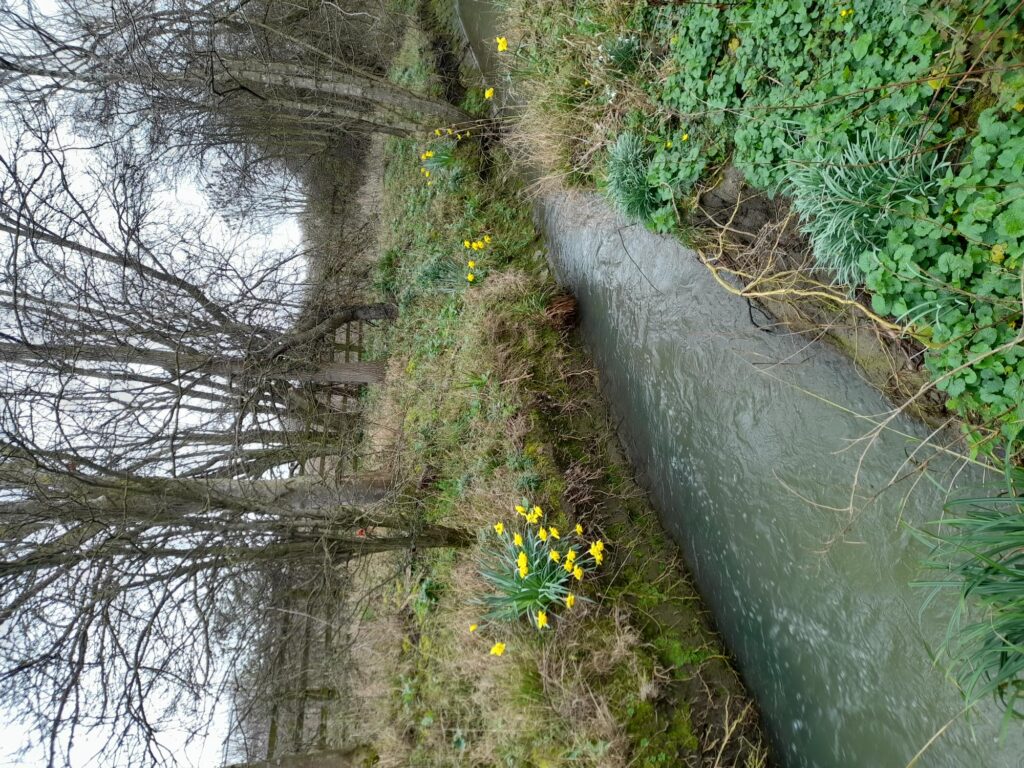
Well I have to blog today as it is March 1st and theoretically the end of winter. It is relief that it will soon be behind us and we can look forward to warmer weather and longer days. Had a lovely walk this morning with the dog – she also felt the joys of Spring and for an old dog she was remarkably active. I took a picture of the daffodils along the brook – the snow drops having largely come to an end – so quickly it seems. This was the brook that ran dry last summer – sadly there are no trout in it.
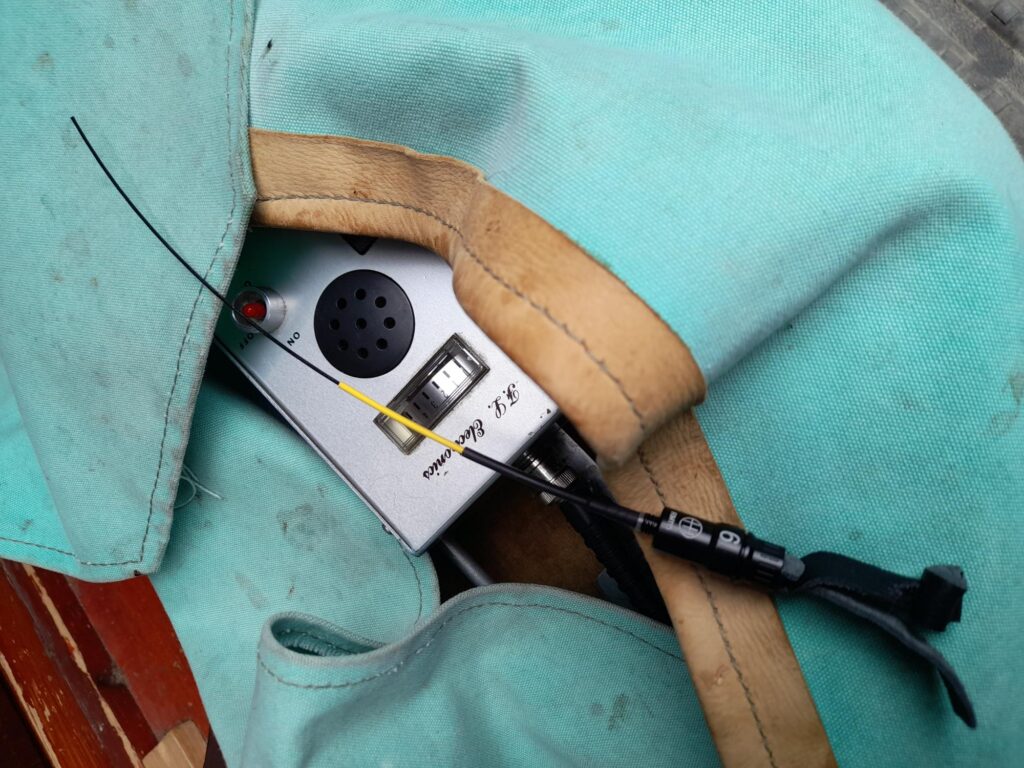
My new transmitter arrived – pictured below with the receiver. As I said in my book ‘Falconry – aspects of care of the trained falcon and hawk’ to keep the costs down – which is important – you can buy a new transmitter for an old receiver and this is what I have done. I lost a transmitter on Jarvis and it needed replacing if I want to fly Sprite our peregrine. He has been known to range away and so the right transmitter with sufficient power is important. Use of telemetry these days for welfare reasons is essential. I grew up in a time when it was not available and as I say in the book we knew nothing different. We would not have that feeling while looking for a lost bird that perhaps we should have bought a telemetry set after all!
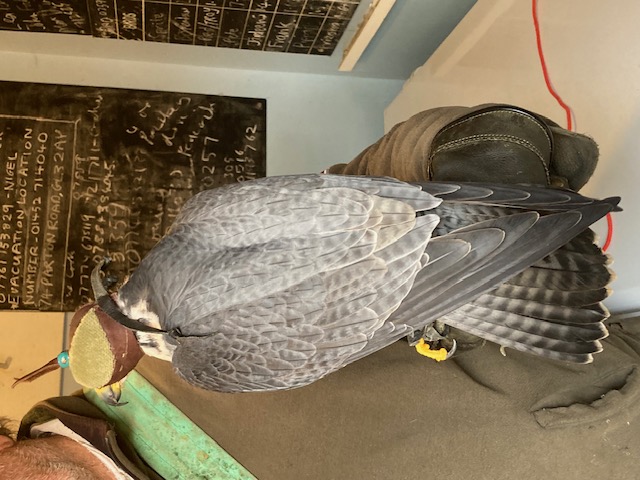
Sprite is looking great see below. I do fly him all year round but while on holiday in November he was rested with more food and he started moulting very heavily as if making up for lost time. So I left him to it and with bad weather after Christmas I have only just got him out of the loft to weigh him. Apart from the outer 1st primary – which we will have to wait till next moult to be replaced – he has moulted completely through. I look forward to flying him starting tomorrow. The tip of his beak will need to be shortened – it is too long – but otherwise it has largely kept its shape after coping it sometime ago.
By the way my book is still available and hopefully those folk who have bought it have found it useful. It can be found almost everywhere on the internet including Amazon, Waterstones, Barnes and Noble in America and other outlets too. In the UK ‘Coch – Y – Bonddu Books’ actually stock it – if anybody is out that way and wants to drop in. My book was mentioned in the comments section in ‘The Spectator’ in reference to the film ‘H is for Hawk’. That was pleasing.