High perches and casting jackets.
 March 14th, 2026 |
  Author:
 Height offers birds security – you can see this in the loft environment where birds seem to be calm and relaxed on the higher perches – particularly as they look out of the loft window.
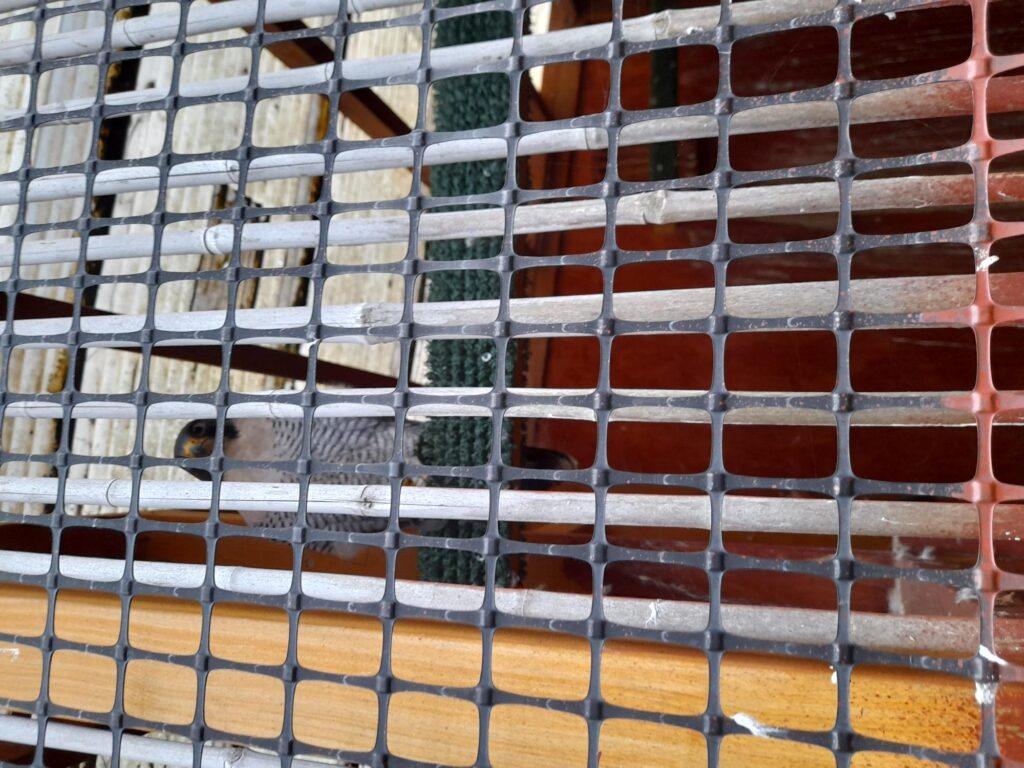
Above picture of my lofted peregrine ‘Sprite’ from my book ‘Falconry – aspects of care of the trained falcon and hawk’
You can walk right under a pylon with a wild peregrine high up on a spa looking down – sitting fluffed up on one foot – the picture of contentment – perfectly relaxed with its mortal enemy 100 feet below.
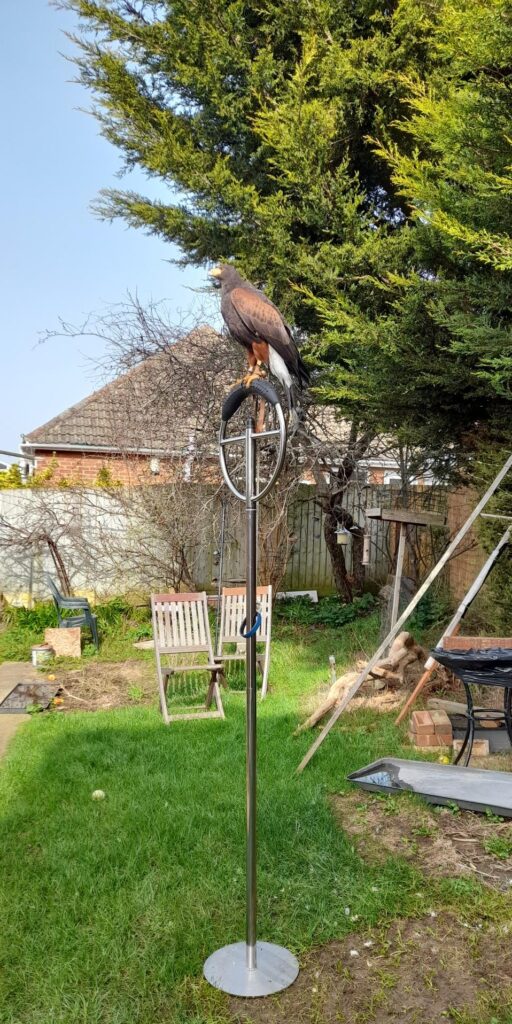
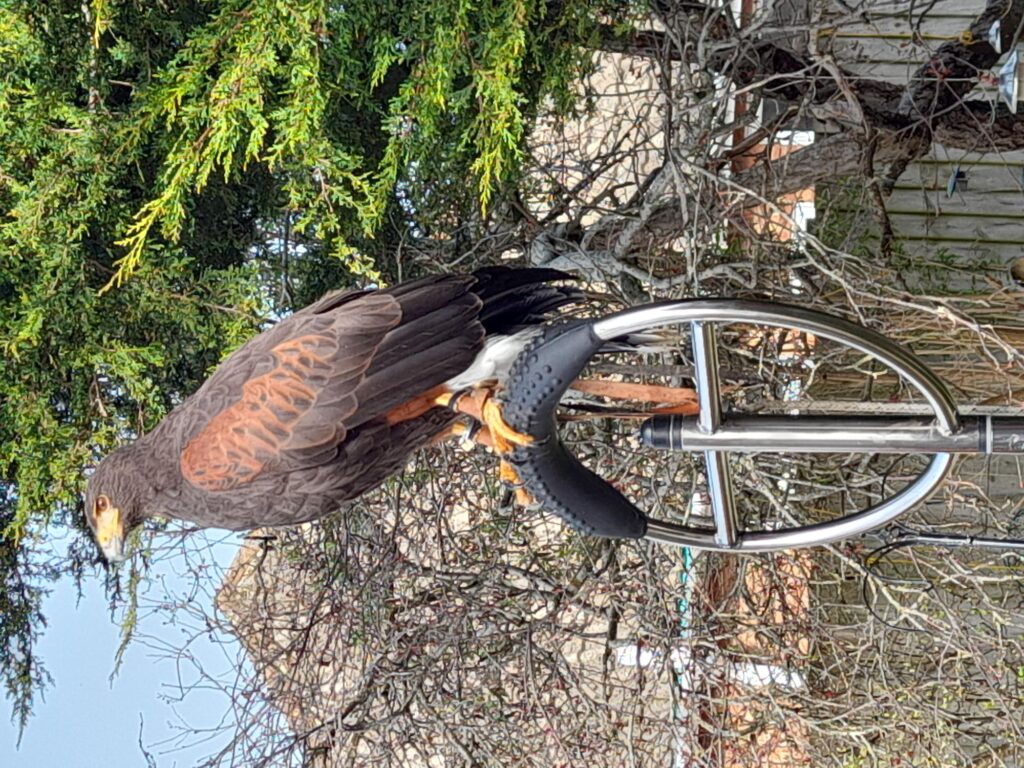
In the trained setting you can see something similar with the use – outside of the loft – of the high perch. They are really quite remarkable. Harris hawks seem to love them but in fact they can be used for most birds including falcons.
I first saw one been used for a goshawk but when I spent a morning with a falconry friend with her Harris hawk sitting out on the lawn on a high perch. It was perfectly happy and did not move all morning. She had a bath next to her which she could easily and safely descend down to it with the use of a standard leash length on a light weight but very strong plastic ring. So a long leash with associated dangers is not necessary.
I have not mentioned high perches in my book ‘Falconry – aspects of care of the trained falcon and hawk’ because I have never used one – but I was very impressed with what I saw and felt confident to recommend it to another falconry friend. Of course they are weather dependent and cannot be used if too hot or it is raining and should not be used as a substitute for proper housing for birds.
Also birds cannot be left unattended even though they are safer from dogs and cats than if on a low block or bow perch- but clearly not completely.
They learn – particularly Harris hawks – to use the perch very quickly a there is a premium in height in the bird of prey mentality. Here are a couple of pictures of the high perch in use – this was her first day! as I said I recommended that her falconer might consider one to solve a problem that he was experiencing in the lofting arrangements for this bird. They could also be used as an example of management change to jolt a Harris hawk out of an episode of feather plucking. I talk about this in my book.
Thinking about my book the section on casting I hope people will find useful. I used to help the head falconer when a bird needed to be cast. Many years later on visiting him he was using a casting jacket mainly because he was working on his own.
I have continued using an assistant and a T towel but on occasion I have used a casting jacket – I do have one.
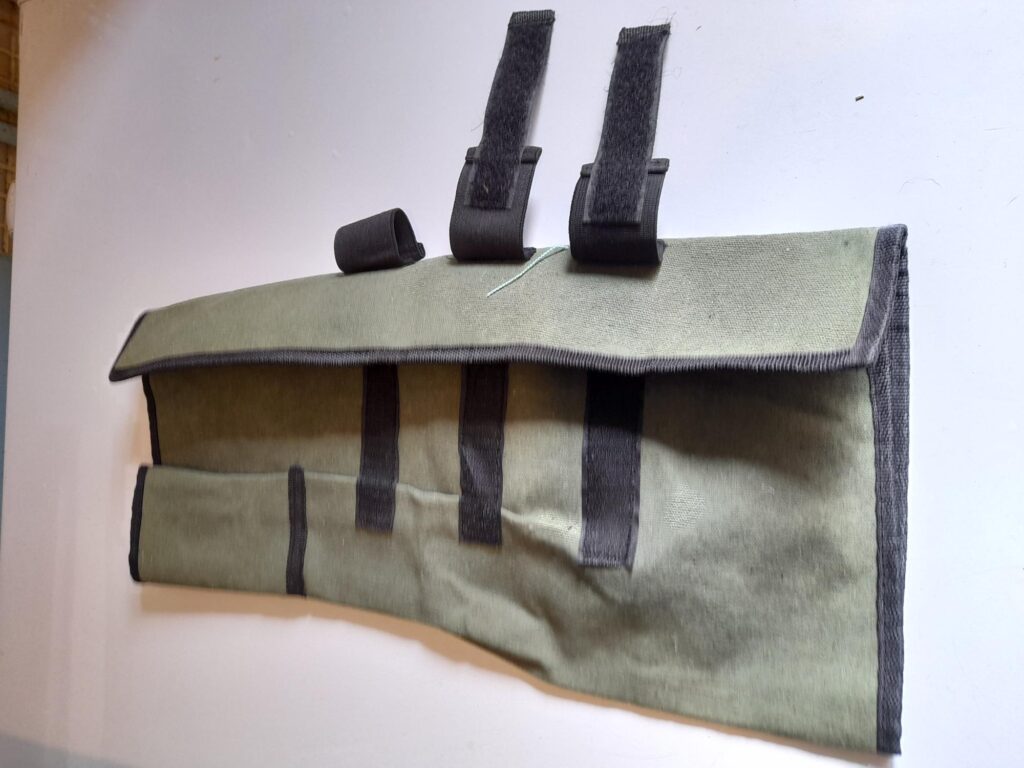
The important point is that the bird has to be cast first before it can be laid onto the casting jacket and that is the bit I cover including how to cast a bird off your own fist – which you will need to do with an unhooded bird if you are on your own. It also underlines the usefulness of the hood.
I have tried to represent in the book what I do and of course new methods and ideas do come along – including the use of the loft which represents along with its construction a major part of my book.
The book is on sale practically everywhere on the internet – Amazon, Waterstones and others- or in person from Cochy Y Bonddu books who stock it.
 Posted in Uncategorized