Cornish Kestrel
 June 3rd, 2025 |
  Author:
 It has been a wet morning here and quite windy so I did not fly the birds but instead fed them on the fist in the Hawkroom. When I had finished it had stopped raining – typical! But I made good use of the time and ended up coping the talons of the birds starting with the peregrine.
As I have said previously the section in my book ‘Falconry – aspects of care of the trained falcon and hawk’ on foot care is the one I am most proud of. It is the most useful in terms of care of the bird at home. Prevention of bumblefoot is so important. Regular checking of the underside of the feet, coping if necessary and the use of astroturf as a perching surface will do much to protect the bird from this debilitating condition.
Everybody knows how fond I am of kestrels and I can watch them for hours as they quarter back and forth, periodically hovering as they search the grassland below for a beetle or vole. They have such mastery of the technique in all weathers from a still day to a blustery one – keeping perfectly still.
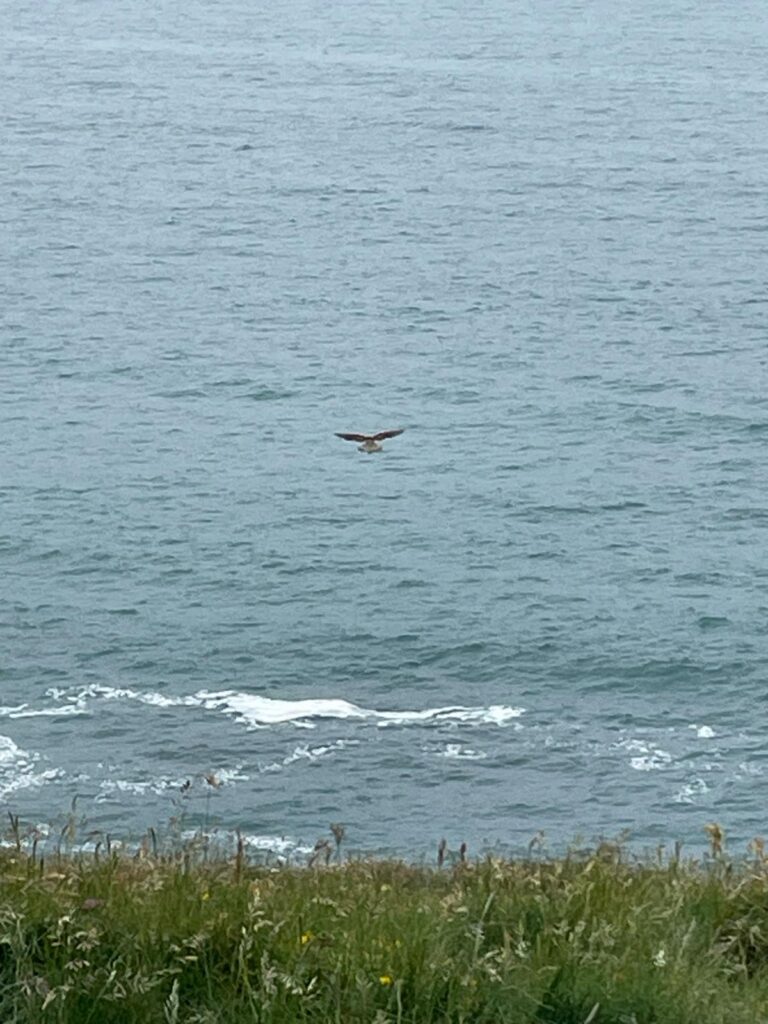
Below is a photo of a hovering kestrel taken by my sister on her mobile phone near Mullion on the Lizard Peninsula. Costal Kestrels have a timeless quality and seem immune from what’s going on in the rest of the world. The costal habitat one would like to think is also timeless but sadly not. Grassland needs management – grazing or mowing – otherwise it will be grassland no longer.
I will sign off with a the picture. I can just make out from its tail that this is a male kestrel hunting – no doubt for a family of young kestrels nearby. Wonderful.
 Posted in Uncategorized