Hot Days.
 July 1st, 2025 |
  Author:
 My children used to ask me why our falcons no longer went up high in warm weather. Peggy and Duke – the falcons I had when I first started doing demo work – would both thermal in warm weather – not only at home but also at shows. It was followed by a spectacular stoop back into the arena. Peggy who was an imprinted hybrid lanner-lugger falcon bred in 1986 – the first of her kind. I have spoken before about her interesting back story. Both her parents were wild caught birds. She was an exceptional falcon and is featured in my book ‘Falconry – aspects of care of the trained falcon and hawk’ waiting on in the section on the development of the falcon. And Duke a lanneret bred in 1988 was beyond exceptional and was a falcon of a lifetime. I was so lucky to have Peggy and Duke, and they graced many a country event. I must include Waqar a male lugger falcon to the list of great falcons that I have had.
Back to the discussion in hand there are several reasons why falcons are inclined to thermal – all of which are linked to hot weather. With Peggy and Duke, it was the summer of 1990 when it started which coincidentally was very hot. I remember particularly with Peggy having some scary moments – including losing her at a show. Thereafter she would almost always thermal on warm days.
I think flying them in high condition does encourage a falcon to do its own thing – as it were – with warm air and with plenty of lift the temptation. If you watch them as a spectator and then reward them on their return – this positive reinforcement will encourage them to do it again.
Whereas a more cautious approach would be to call the falcon down as soon as it starts to drift up by shouting “Ho”. Which means guaranteed food. Then to reduce the likelihood of this happening again the bird would need to have its condition lowered – to make it a touch hungrier.
When a falcon does this at home your time is your own. But for shows where it is even more likely to happen particularly for an ill-prepared falcon – it can be disastrous.
When I first started doing demos many old country events did not have a strict timetable and there was some time latitude to allow your falcon to return. But as time has gone on with many smaller agricultural/country shows disappearing the shows that remained tended to have a more organised arena timetable. With expensive arena acts to accommodate organisers are less than impressed if you over run your time slot waiting for the falcon to return.
That is why the demonstration falconer must be professional and have falcons that are properly prepared for event work, and this means not allowing them to thermal at home.
Any sign that the bird is starting to go up the falconer must use the ‘Ho’ shout to bring the falcon down before it has gone too high.
To answer my children’s question why my birds in the latter stages of my career did not go up when it was hot was because I did not let them. I was being professional.
But there are notable occasions when it does still happen, and we recall an incident with ‘Leah’ a very fine falcon who went up on a thermal at Blenheim Palace during the Jousting Event. My younger son and his friends were there, and Leah went straight up like an elevator to a great height above the arena. It was so unexpected I just stood there and watched along with the audience and when Leah was several hundred feet up, I shouted “Ho” with the help of the pa sound system, and she just folded and stooped vertically back into the arena to catch the fully extended lure high above me. It brought the house down. As the Jousting commentator kindly said afterwards “How do you follow that!”
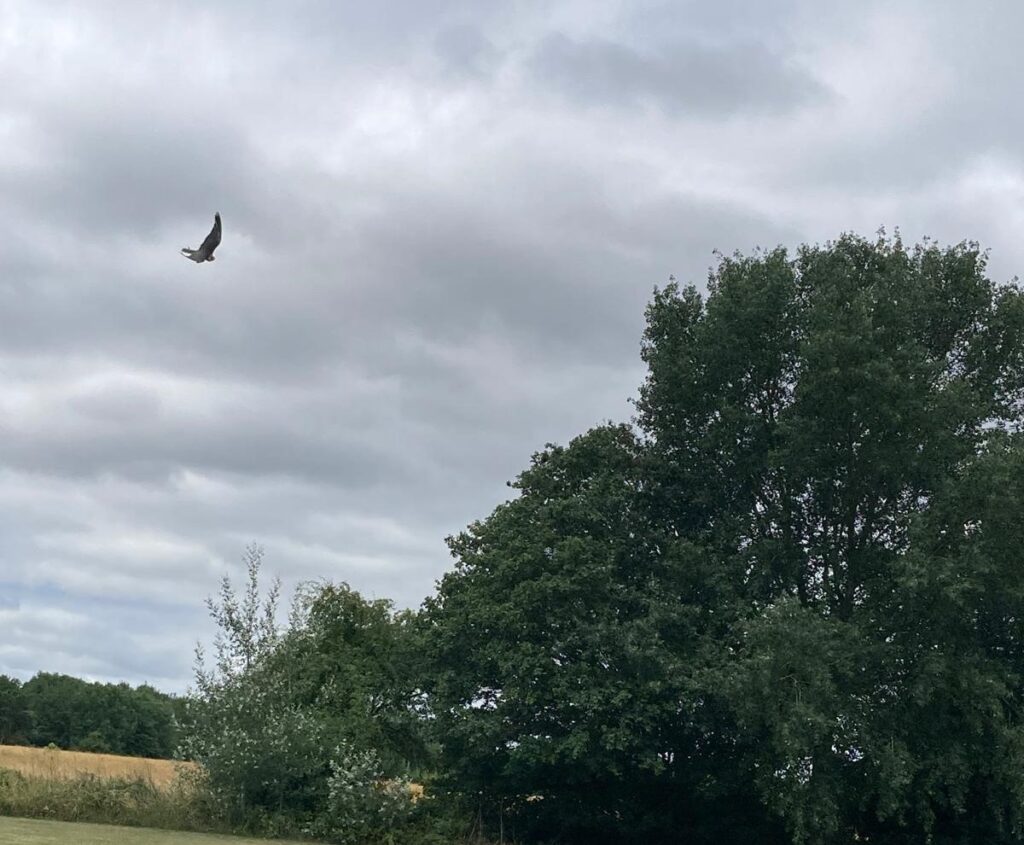
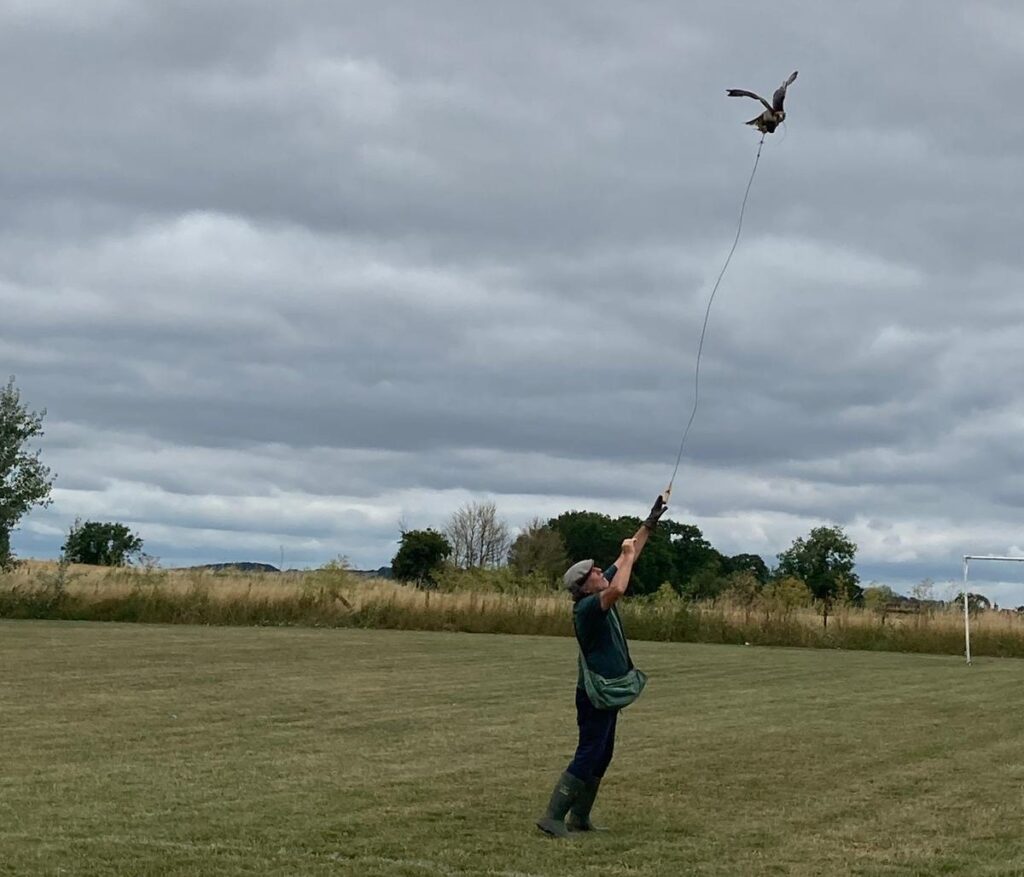
We took some photographs of the birds flying on Sunday morning. I wanted to get some flying shots of Jarvis the lanneret I trained for the book. And here they are.
After a pass Jarvis climbing away.

Coming back round
The catch – lure line fully extended
Happy looking falcon feeding on the fist

 Posted in Uncategorized