More rain
 February 13th, 2026 |
  Author:
 We woke up to rain and I was rather hoping that by the time I flew Frank – our lanneret – it may have stopped. It seemed to relent and I jumped in the van and went down to the flying field. At the field a pulse of rain came through. As I sat in the vehicle I realised it was set in so I cut my losses drove home and fed Frank on the fist in the Hawk Room while hoping for a better day tomorrow.
I still look out for Jarvis hoping she may be waiting for me in the field – making a miraculous return. As I say in my book ‘Falconry – aspects of care of the trained falcon and hawk’ if you lose a bird and are lucky enough to get it back try and work out what went wrong. As I have also said it is easy to lose confidence but it is important not to do this as ultimately the falconer will start using excuses not to fly the bird. By all means have a break and have a cautious return. The bird may need some conditioning changes – often there are warning signs that you are close to losing a bird and if you ignore these the inevitable will happen. But we all learn from our mistakes and losing the bird will often throw light on the preceding days to the loss. Try to make sure it does not happen again.
But as I have said losing a bird can just happen – out of the blue when you least expect it. Like with Jarvis. I realised I was in trouble because I had a similar incident many years ago with ‘Pippa’ one of my best falcons. After a couple of hours out she was totally spooked by the experience and eventually I had to wind her up with the creance as she sat unapproachable on the lure. After that incident I never had another problem with her. It is a question of getting the conditioning right and building up resilience in the bird by flying her in different places, in differing weather conditions and in her case ‘Pippa’ as a demo falcon building up her event portfolio in the right way.
On reviewing the loss of Jarvis I now believe on reflection that her condition was too high – although I had no signs that I was about to lose her – no close calls. Secondly I should have responded more quickly seeing that she was struggling to get through the tree and to come into the lure by jumping over the fence and walking around to reach her on the other side – which would have meant calling her down onto recently planted field of corn – which I did not want to do. I now believe she left the other side of the tree to go chasing and encountered some very irate crows. She may have initially chased one of them. Once she was spooked, in high condition and finding herself in a war zone the writing was on the wall.
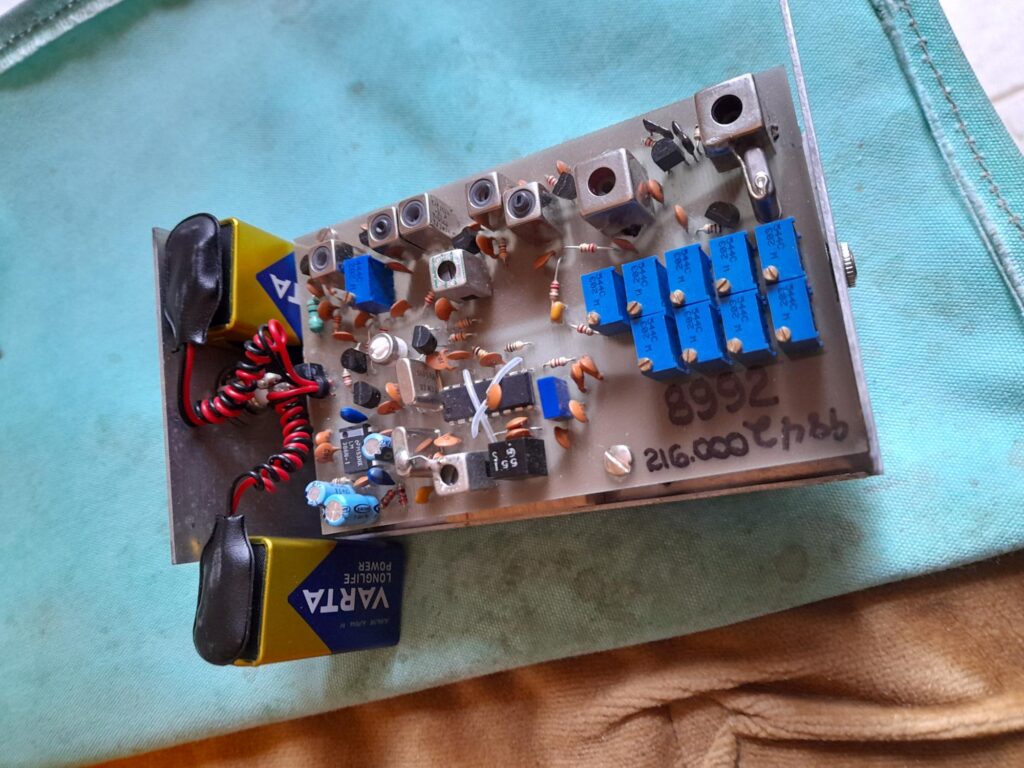
The telemetry was used for four days – successfully at first but the bird would not come down – so I have now changed the batteries on my set – the receiver end – as shown below. This is an old Luksander non satellite set – not GPS. The set worked well – they are all limited to how well the transmitter is working. I have picked up a peregrine with a GPS tag on that was not working. On the other hand I have seen these systems working well – they are very effective. The downside to these GPS systems is the cost. The non satellite sets I suggest in my book are a cost effective option for the would be falconer starting off with all the other expenses involved. I suggest buying a second hand system and then purchasing a new transmitter to keep the costs down.
 Posted in Uncategorized