May.
 May 2nd, 2026 |
  Author:
 Well May has arrived and the first half at least are the best 2 weeks of the year. I saw a party of 4 swifts yesterday – on their way to somewhere – it was wonderful to see them. In the evening we took the ‘on loan’ sports car down to Wainlodes on the River Severn and were delighted to see so many Sand Martins.
In fact a couple of years ago a pair nested in the lock gates where the River Chelt enters the main river. Today I saw our first House Martins of the year back in the village. They nest under the eves of the village pub. Their – sadly – numbers have greatly diminished over the years and to see that they have returned for another year is uplifting. It is lack of insects which I feel is their main problem – we can help with nesting sites but the lack of insects is a culmination of many factors affecting them here and across their entire range.
At this time of year as a schoolboy I used to ride out to the Falconry Centre in the hope of going out hawking in the evening with Paul the head falconer. The were the best days and we had some wonderful hawking. It was worth the long ride home in the dark stopping off in Newent to buy fish and chips – what could be better! I learnt so much and was lucky enough to have my own birds at home to practise on.
And this is what my book shows – ‘Falconry – aspects of care of the trained falcon and hawk‘ 50 years of knowledge and joy. Of that 35 years as a professional falconer and now that I am retired as an amateur again. My friend Graham Watkins the gundog trainer who kindly wrote the introduction to my book is similar to me in that we both have a love of what we do which goes beyond retirement. With my book I hope the reader can use it to enjoy their falconry and create their own stories..
Below is a picture of Sprite our peregrine falcon still hooded after flying – while I changed his bath water and further below from earlier in the week Frank our lanneret on the sock lure after flying. I flew him in a different place today and he was just amazing – really stylish. As I have said before it is a good thing for trained birds to be familiar with flying in different places. This is essential for display work but also if any bird is lost it will not be disorientated and fazed by finding itself in an unfamiliar setting. It will be much easier for the falconer to call it down. Anyway here are those photos.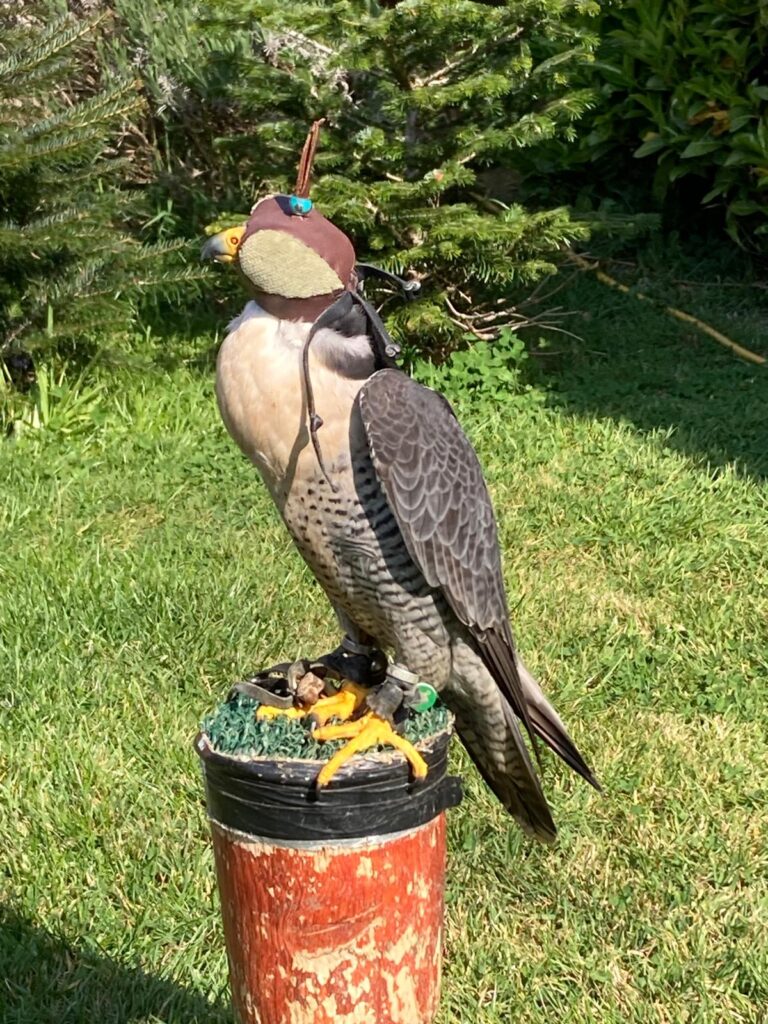

 Posted in Uncategorized