Harris hawk to stay.
 August 30th, 2026 |
  Author:
 For the last month I have been looking after a friends female Harris hawk while he was recovering from an operation. I am glad report she went home today.
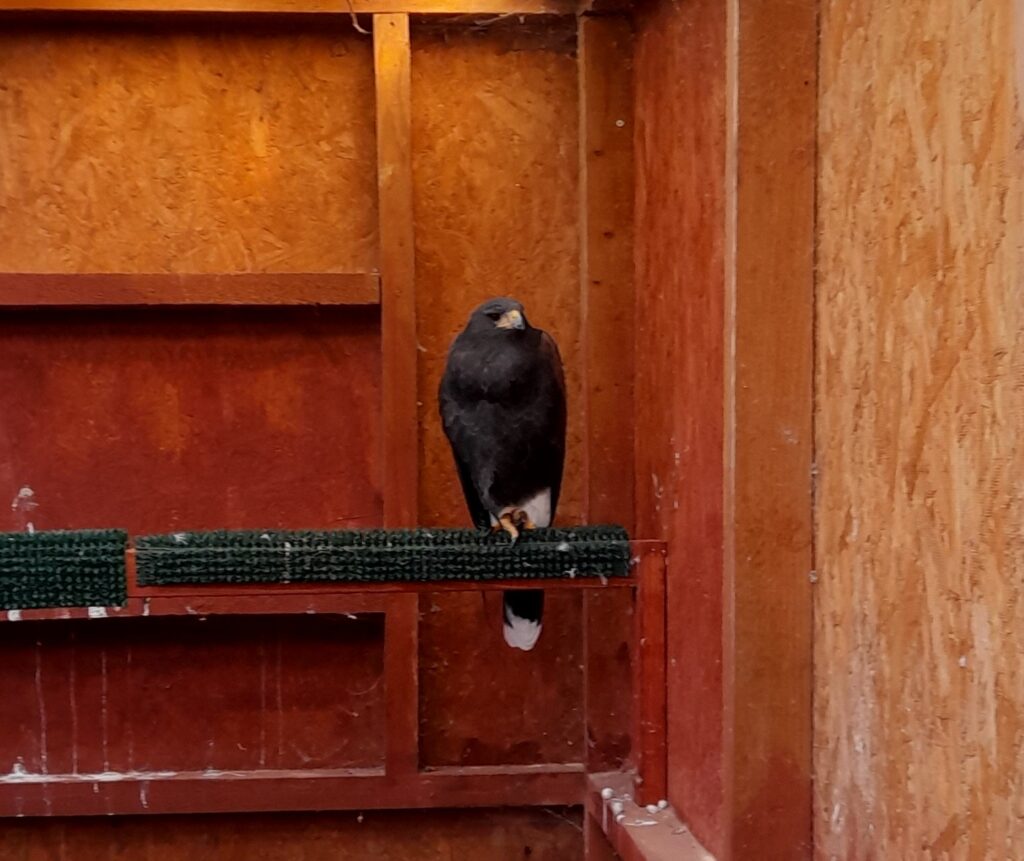
While she was with us she was lofted in what I call the ‘standard’ weathering loft as seen in my book. In the book it is just over 9ft x 7ft and about 8ft high at its highest point or so – actually in practice very roomy. It was this particular size because I wanted the materials to be readily available from a DIY store in a cost effective way.
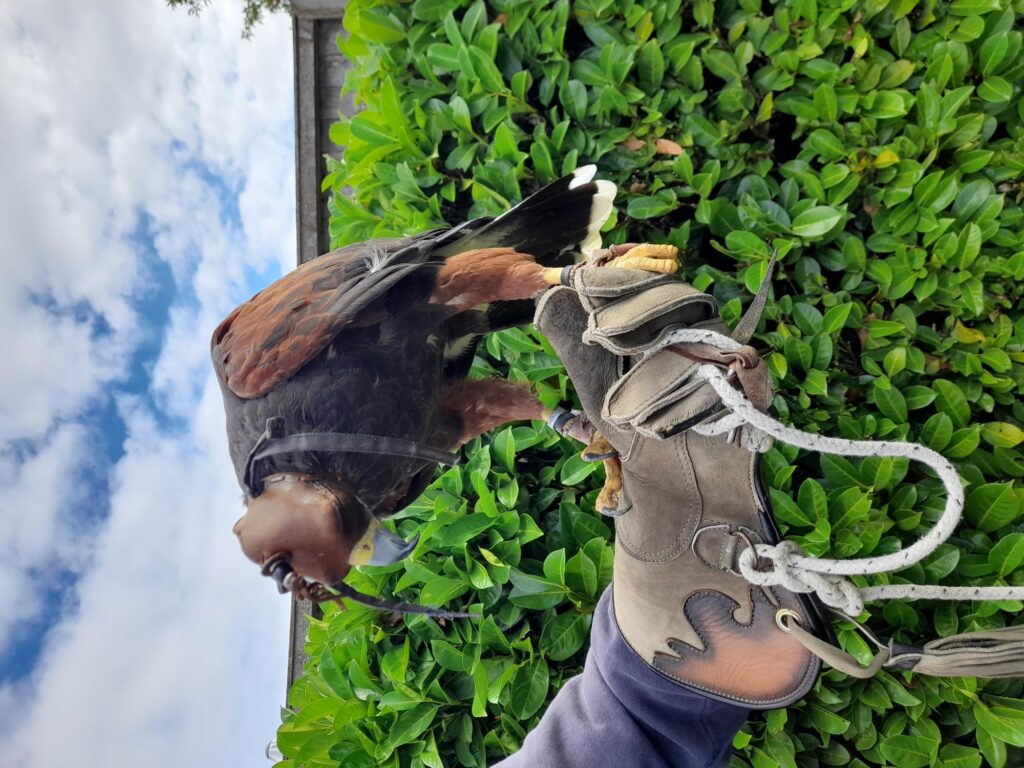
The Harris hawk ‘Lakota’ was very comfortable in the loft and with plenty of food – 6 chicks a day – she started moulting very heavily. Because she has not been flown for a while there had been no stop or endpoint to the season – when on being ‘fed up’ she would then start to moult. So she was moulting quite slowly.
With Lakota left to her own devices in the loft in the very hot weather with plenty of food this acted to speed her up and she started to moult very heavily.
Apart changing her bath water just inside the loft door and her feeding mats I left her alone – just checking twice a day to make sure she was alright.
As I say in my book the old falconers of yesterday were well aware of the importance of heat and would often use the loft of a building with some artificial heat to moult groups of falcons through as quickly as possible. We do not do that now.
Of course you can moult a falcon or hawk through in a weathering (on a block or bow perch) and feed it on the fist everyday but if you are away lofting a bird is a much safer option. It means you can leave the bird to be looked after by a non specialist carer.
Harris hawks can be flown through the moult if in good feather condition and some of the best hawking at rabbits can be had during the summer.
Here are a couple of photos of Lakota one in the loft and the other when she was picked up today.
My book ‘Falconry – aspects of care of the trained falcon and hawk’ is on sell at Amazon, Coch -Y-Bondu Books ( who stock it on their shelves), Waterstones, Blackwells and others. It is a very large paperback of 346 pages with nearly 600 hundred photos and retails around £30.
 Posted in Uncategorized