Blue Sky!
 February 24th, 2025 |
  Author:
 After many days of continuous cloud this afternoon we had the wonderful spectacle of a blue sky. I can hear the wild birds pairing up and see others building nests. A real feeling that the winter may be coming to an end and Spring about to start. An upbeat feeling of hope.
Animal duties of course continue and a period of nice bright weather with a gentle breeze is very much desired. The perfect day for flying falcons is a rare occurrence and the birds have to learn to fly in all but the harshest of conditions. I do not have that pressure these days as I am no longer a professional falconer.
The energy I reserved for that occupation I have transferred to write a book called ‘Falconry – aspects of care of the trained falcon and hawk’ which is a technical book which I hope the falconry community or those aspiring to fly a bird may find useful.
The hood has a section on its own in the book reflecting its importance. It is an object of much curiosity and the book discusses why it is used and some problems that may occur as the bird matures. Gentle perseverance with some lateral thinking during this tricky period is required.
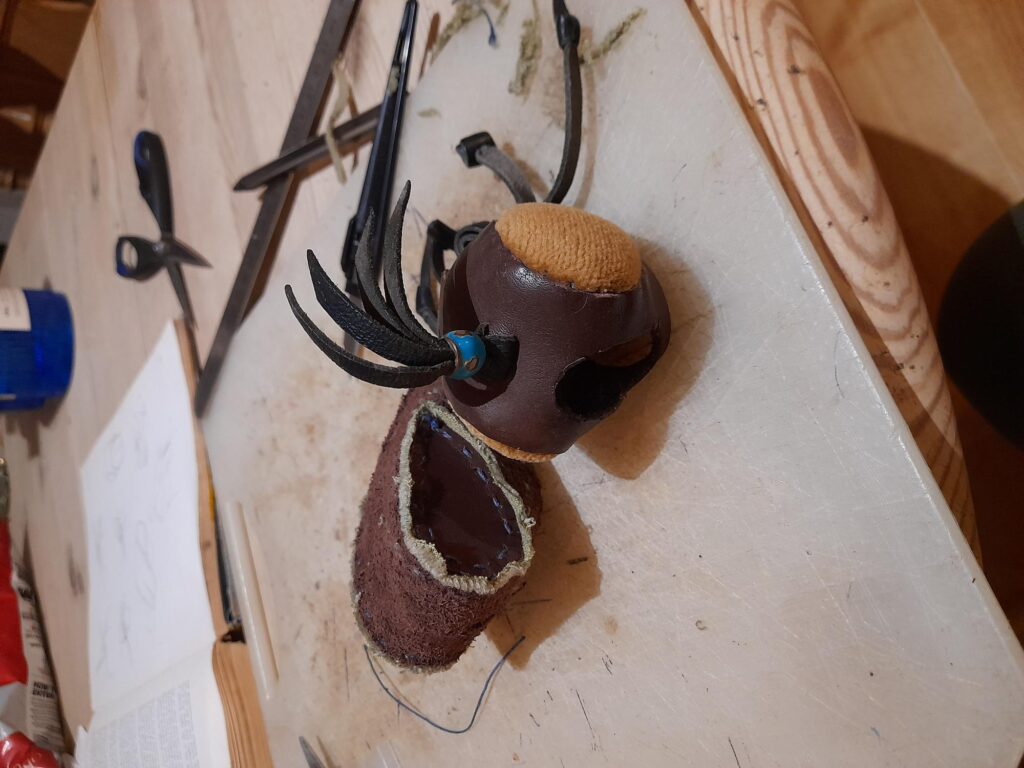
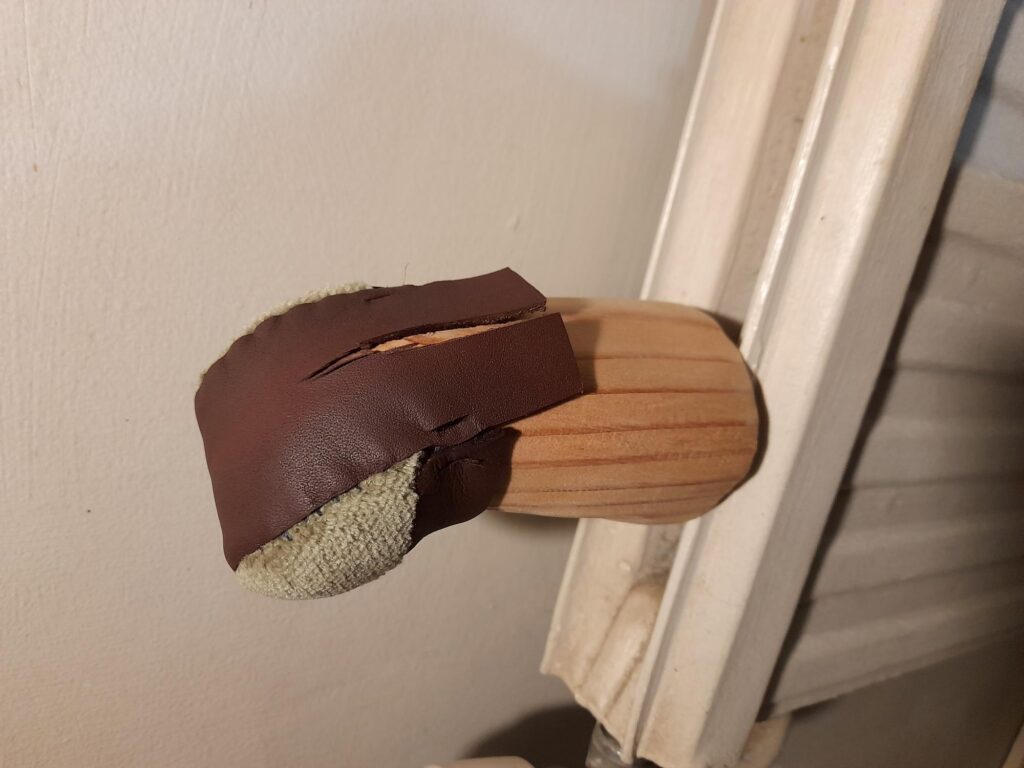
There are different types of hoods and I have shown these in the section on hoods. However the hoods I tend to use I have not explained in the specific hood section because I make them myself – they are not ones you can buy. They are known as the ‘Falconry Centre’ hood developed by Phillip Glasier. They are also known as the Syrio-Dutch hood which is a mixture of the two hood types. Essentially they are a blocked hood like a Dutch hood but a simpler version. Like the Dutch hood proper they are sewn inside out then soaked in warm water and turned to be gently stretched over a wooden hood block – shaped like a falcons head – and then left to dry. The resulting hood fits the falcon very well – they cannot get them off easily – and this is particularly important when they are sitting next to other falcons on a cadge waiting to be flown.
The Falconry Centre hoods that I make are incredibly versatile in terms of usage. A peregrine tiercel hood will not only fit the aforementioned bird but also both sexes of lanner and lugger falcons along with male Harris hawks and male goshawks. They are all roughly the same size and before specific hoods came along it was a case of one size fits all. I make my own hoods because it is something I have always done. As I have said in the book the modern hood maker is in a different class in terms of design, build quality and finish. This has necessitated new hood patterns specifically for each type and sex of bird.
I will sign off with a picture of a Falconry Centre hood under construction ready to be soaked and turned to dry on a timber hood block.
Below drying on radiator.
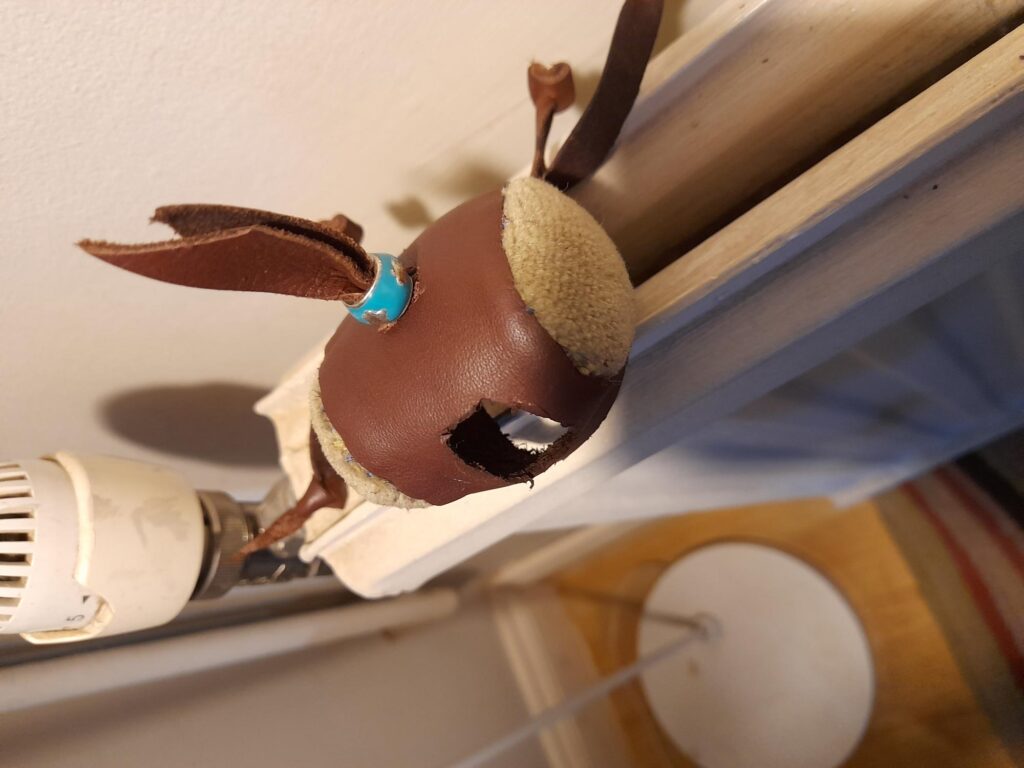
Below finished hood cut to length with plume and braces. The beak opening may need further modification when trying out the hood on the bird to get it right.
 Posted in Uncategorized