Cold Weather – ceramic bulbs and lofting and my book.
 November 19th, 2025 |
  Author:
 As I said in a previous news blog the 16th November is the one year anniversary of my book Falconry – aspects of care of the trained falcon and hawk‘ known just as ‘Aspects’. It was published by the Gloucester based Choir Press.
I have learnt much about the book business in the last twelve months. Had I known then what I know now the book may have been different possibly shorter with a simplified title to make it less expensive. That would have changed it from what it was intended to be – a legacy project containing much of my working knowledge from the last 55 years. Anyway this is just navel gazing because it is too late now.
But when I read it – occasionally in the Hawk room when feeding a bird on a wet morning – actually I am happy with it and feel it would be a useful addition to any falconers book shelf.
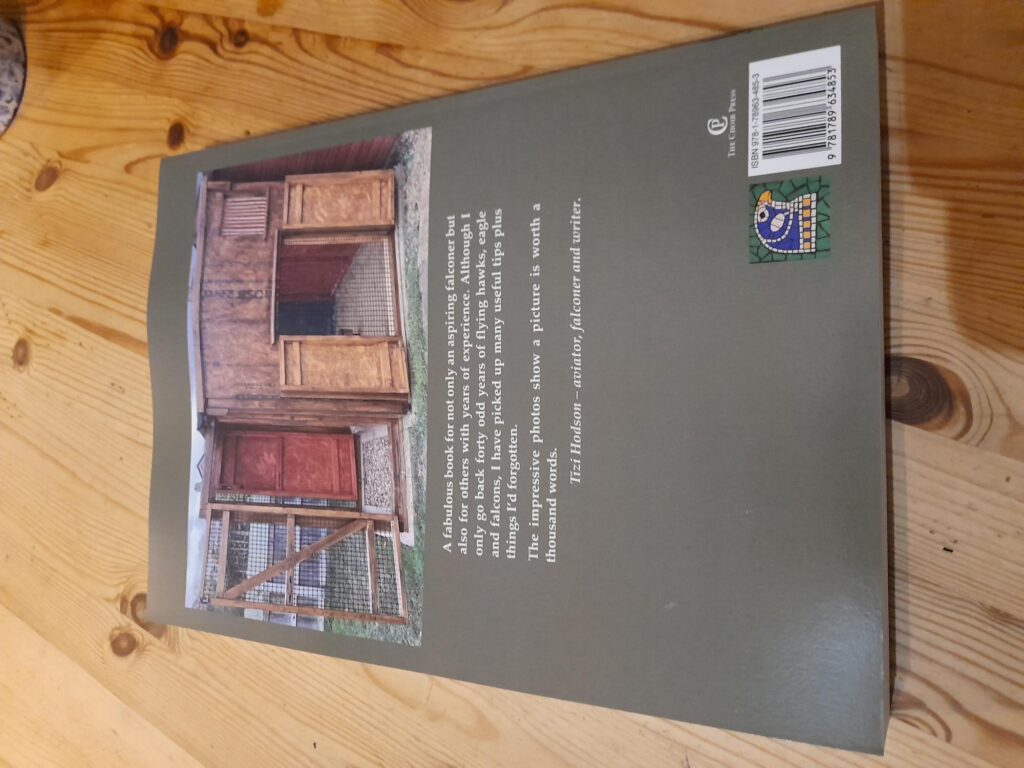
The weathering loft is my contribution to falconry. It represents a synthesis of construction techniques that I have developed over the years. Many falconers will of course make their own version – but I think it underlines the point of providing a nice home for your hawk sited often in the urban setting of a back garden. Of course when the bird is not at home it is being flown – which is what it is all about.
So the book stands. This is the back cover showing the weathering loft with a nice review from Tizi Hodson – I see it as a peer review because she is such a fine falconer.
What prompted this news blog today is the weather. It is turning much colder with temperatures down to -3c forecast for the next 2 nights. This presents a significant challenge to the first year bird because of danger of wing tip oedema.
The option is to either loft the bird – to rest it in high condition for the winter months or if a loft is not available then to use artificial heat to prevent the bird getting chilled. I recommend ceramic heating bulbs to keep the frost off. But there are other ways of doing it. In an emergency with no other options available the bird can be brought into the house and put in a night quarters. This is OK for short term use but boxing birds overnight for welfare reasons is not a good idea. They can end up spending too much time in them. Ideally the falconer should have planned for this eventuality before getting the bird. Some birds are more vulnerable to WTO notably and importantly Harris hawks.
Once you get through the first year then WTO becomes much less of a problem as the bird will have hardened off making it less vulnerable to this condition.
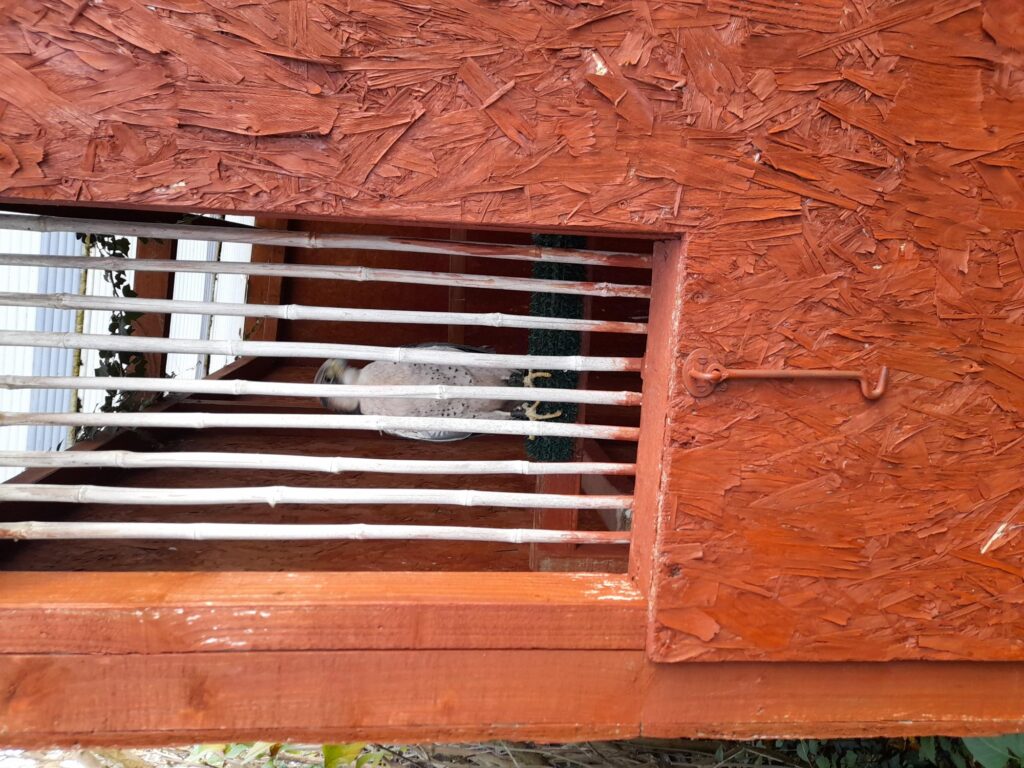
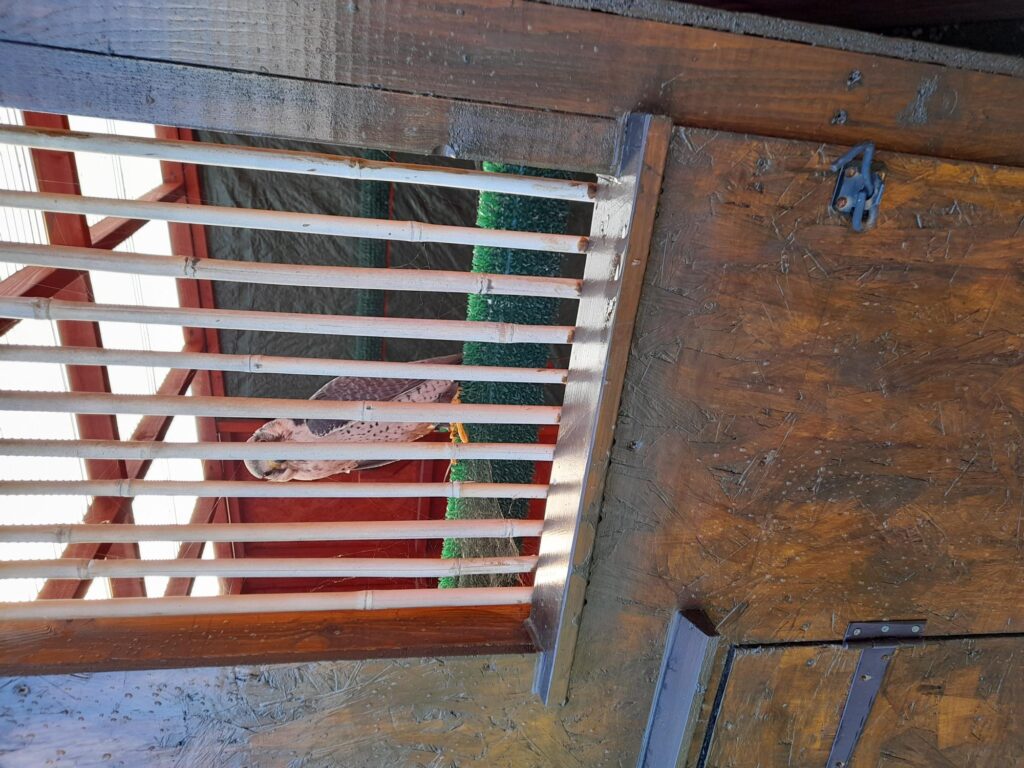
For example I am flying Jarvis – the lanner falcon – that I trained for the book through the winter. He is in his 3rd year now – so he should be fine. But for his own comfort – I do have the ceramic bulb option available – he has gone into a loft. In fact into an older weathering loft I made some 30 years. Frank our other lanneret has gone into the weathering loft we constructed for the book. photographs below.
Jarvis at the window of an older weathering loft.
Frank in the new weathering loft – built two years ago.
I discussed in the book that parent reared birds have a habit of becoming increasingly difficult to get out of the loft to be flown- if this happens as a contingency they can go back into a weathering under a ceramic bulb. The option of course if the weather is bad to rest the bird in the comfort of the loft and wait for it to improve.
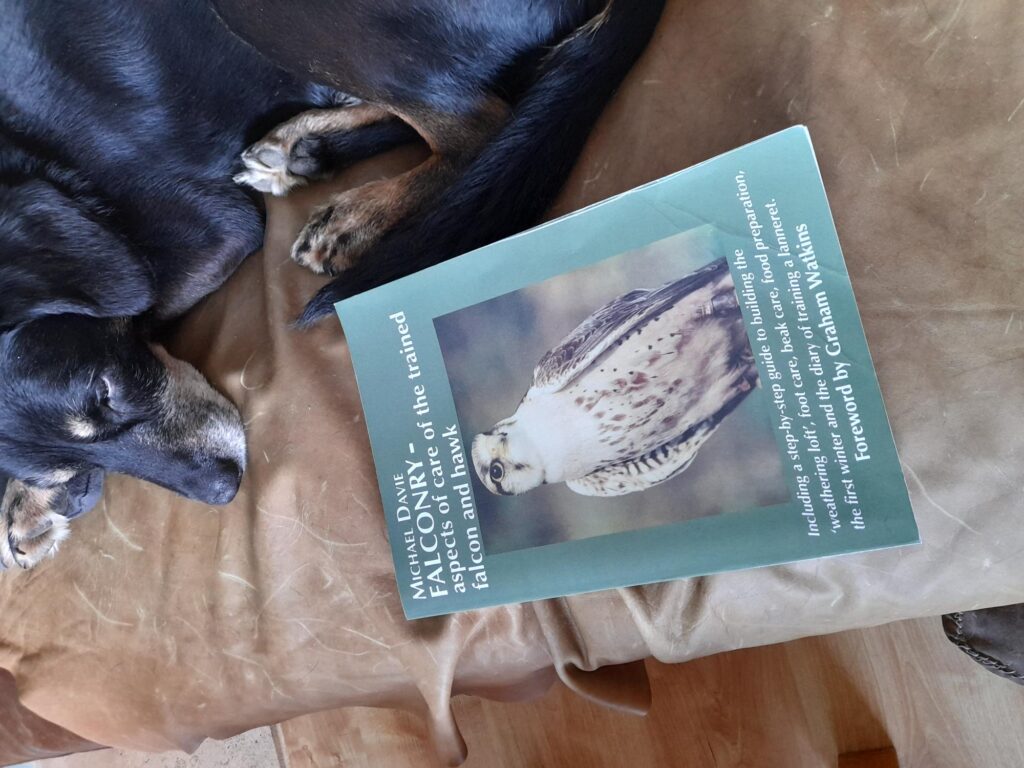
My book front cover shown above – this is my copy. The book can be purchased through Amazon, Waterstones and affiliates including Blackwells along with other outlets at a RRP of £30. Coch-Y-Bonddu Books actually stock it in their shop if anybody in the area wanted to have a look at it. It would make a good Christmas present.
 Posted in Uncategorized