A Supplement to Section 8 ‘Wing tip oedema’ and Section 23 ‘The accommodation we offer our birds. The weathering and the loft’ of the book ‘Falconry – aspects of care of the trained falcon and hawk’
 May 3rd, 2025 |
  Author:
 In both the above sections I mention the use of the ceramic heating bulbs to prevent wing tip oedema in first- and second-year birds. Although as the book says nearly all cases of WTO take place in the first year. Certain species are more vulnerable notably Harris hawks, but any bird can get it.
The book suggests giving all first year’s birds a break over the coldest of winter months with plenty of food and ideally lofted.
For reasons discussed lofting is not suitable for all birds particularly in flying condition and as a result the ceramic bulb can be used to keep the frost off the tethered bird. Not all falconers will have a loft available although a large part of my book is given up to building a dual purpose ‘weathering loft’.
I have used ceramic bulbs for many years and even though we have lofts for all our birds it is very useful for a bird in flying condition that cannot be lofted to have a ceramic bulb to turn on.
WTO or blain as it was called was a rare condition. I can remember helping the head falconer when I was an apprentice in the 1970s draining the watery blisters on the wrist joint of the wing of a lanner falcon. Then sprinkling antiseptic powder on the drained blister. She lost the end of her wing and effectively became flightless. These days the prognosis is much better with the right veterinary care. This is important because we now train and fly many captive bred Harris hawks.
Even so anything reasonable that can be done to prevent this condition should be taken. I suggest in the book it is a good idea to feed up and rest all vulnerable species for their first winter. Most can be lofted if a loft is available. Roosting at height in the comfort of the loft with plenty of food is without doubt the best solution to prevent WTO in the young bird. Use of the ceramic bulb for those that cannot be lofted is the next best option and can be left on during the day if temperatures remain low. As discussed in the book the night quarter box is not a long-term solution – despite its name – for overnighting birds.
For second year birds where the risk of WTO is still there but much reduced – birds in flying condition that cannot be lofted can with the use of a ceramic bulb continued to be flown without feeding up and resting. Although with a prolonged period of cold weather it would still be best to stop flying and feed the bird up and loft if possible.
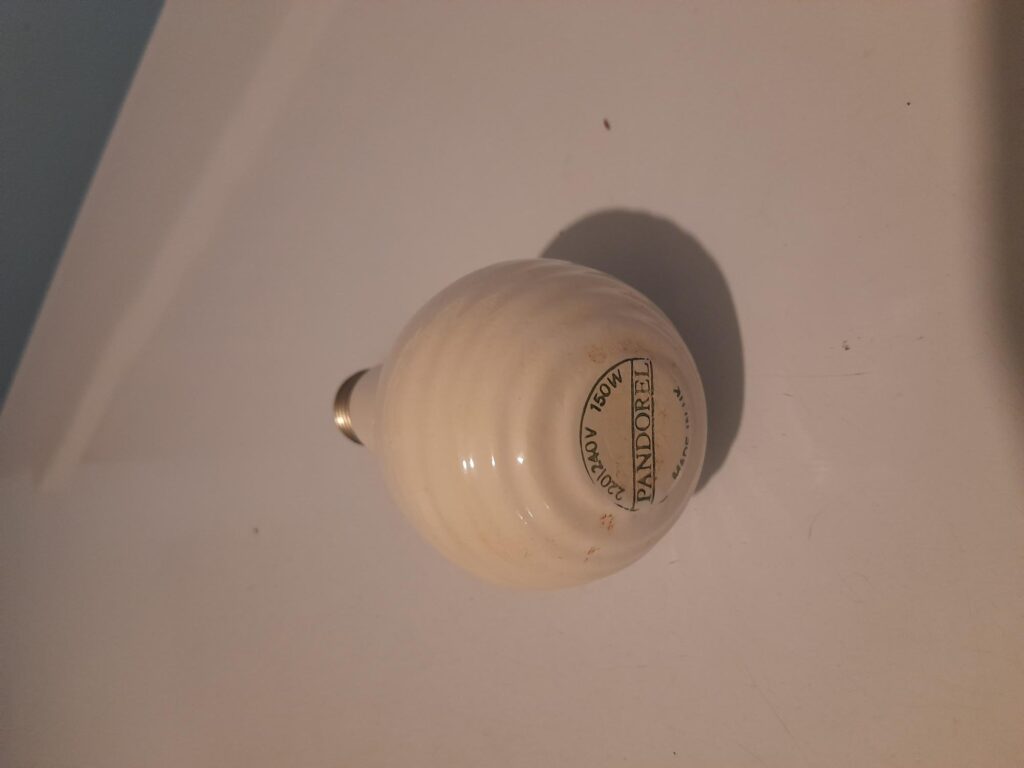
The ceramic bulb as shown below admits no light just warmth. They are incredibly long lasting. I am still using bulbs that I have had for 30 years! We used to get them from West Midland Farmers who are sadly long gone but the bulbs are available online – I have checked although they look a little more modern.
The ceramic bulb in its holder is placed under an aluminium shade. This directs the heat downwards.
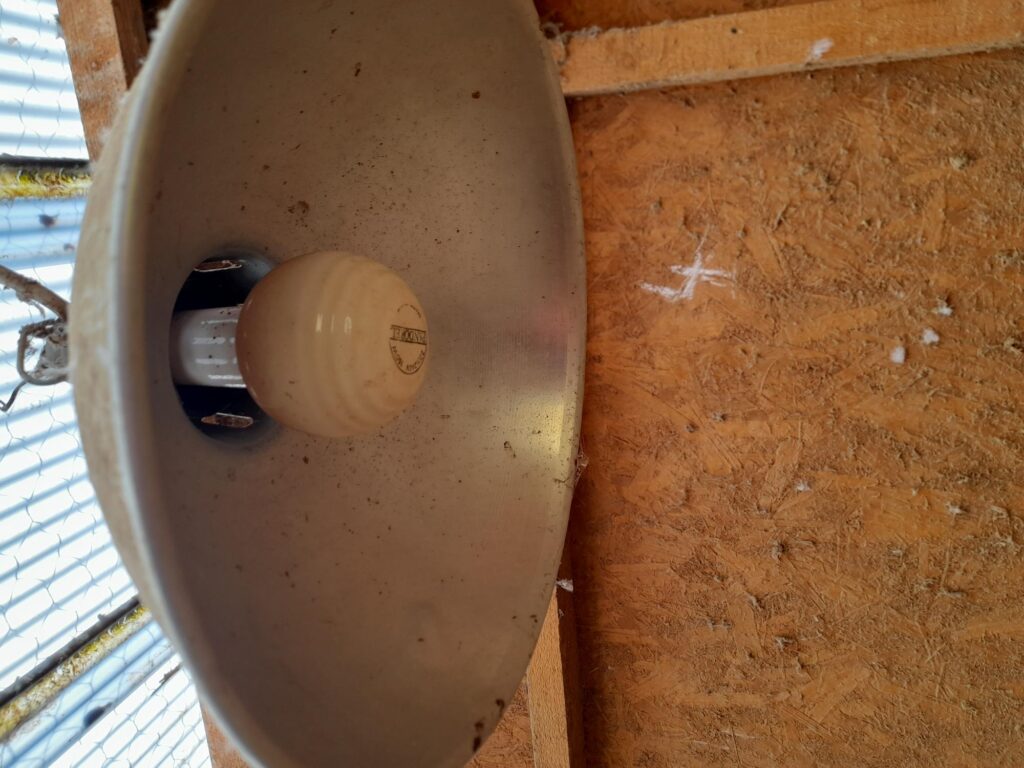
The height of the bulb is important, and it can be placed about 900mm from the top of the birds perch. You should be able to feel a very gentle warming at about bird height. It is not to keep the bird warm like a radiator but rather designed to offer frost protection. I think the falconer should aim to have the bulb as high as possible but on a frosty night or with freezing temperatures the birds bath water should remain unfrozen. This is a good rule of thumb test. This is supplement should be read in conjunction with the text in the book.
 Posted in Uncategorized